“The work of science is to substitute facts for appearances, and demonstrations for impressions.” — John Ruskin (motto of the Society of Actuaries)
The Actuarial Perspective
As our economy opens up and the issues around the risk of becoming infected and dying from COVID-19 get more complicated and confusing, it becomes harder and harder for individuals and organizations to make well-informed decisions. I believe, at least with respect to one key aspect of these decisions, the actuarial perspective can be extremely useful.
I haven’t stopped wearing my mask, I still socially distance, and I try not to break any of the other increasingly elaborate protocols that we are being asked to adhere to in order to keep ourselves and each other safe.
But being an actuary, I started to ask myself some questions – questions that nobody wants to think about and ones that are almost impossible to discuss in public without emotion or being asked to choose sides. Nevertheless, they are questions that I think are vitally important for us to answer as we figure out how to live our lives in the age of COVID-19
It started innocently enough when a friend sent me an article about what had happened at Woodstock more than 50 years ago. The author discussed how that event, as well as numerous other concerts during 1969 all occurred during the 1968-69 “Hong Kong flu” pandemic. Because the article itself was written with an obvious political agenda, I was tempted to simply ignore it as just part of the angry noise which has become all too prevalent these days, but because I grew up in that era, I couldn’t help but continue reading and then conduct my own fact check – reviewing the historical documents and my own memories of the times to verify the truth of what he said.
What I discovered was that despite some exaggerations, leaps of logic and conclusions I radically disagreed with, the article described some indisputable historical facts about that epidemic, which was undeniably a public health crisis, albeit one of an entirely different order of magnitude than the one we are facing today. In particular, it seems that in 1969 there was widespread ignorance, or at least a casual disregard for the health risks we took—both on an individual and on a collective basis.
Granted the world had quite a few distractions at the time — Vietnam, Civil Rights and the Woman’s Movement to name just a few. But still —- nobody proposed closing schools to limit the epidemic, few wore masks, and there was no “social distancing,” though used for centuries, the term itself was only coined in 2003.
No one cancelled concerts either —- not even a 400,000-person event in the middle of a rain-soaked inaccessible field in upstate NY or a 300,000-person event (the infamous concert at Altamont) that occurred at the height of the second wave of the epidemic in December.
One could argue that we were less fearful back then. I believe what was really going on in 1969 was that we just didn’t have good data in real time and we didn’t have the internet to help actuaries and other researchers collaborate globally at the speed of light – to collect, analyze and digest the data and provide their findings to policy makers who could then implement protocols and propose action steps that would mitigate and curtail the suffering and death that epidemics and pandemics can cause.
In theory we should be in much better shape today. In practice we are not. We have the data and the internet, but we are having a noise problem.
In particular, we have too much data. Specifically, we have too much bad data that confuses us and makes analysis – at least actuarial analysis — dramatically more difficult. Data can be bad for all kinds of reasons. Deliberately “faked” data is only one of many potential problems. Flawed and/or poorly designed collection methods, errors made through inattention or stress, honest bias on the part of the “collector”, and inconsistent or unclear criteria used for different information sources are just a few of the many ways that data can degrade.
For me as an actuary bad data is simply that – data that needs to be cleaned. It doesn’t matter how it got dirty; it still needs to be scrubbed to make it usable. More precisely, you can use bad data, and in fact sometimes you have to. But when you have bad data, you have to be careful how you handle it and your conclusions need to be more tentative.
In light of the above it was both understandable and prudent for us to use the precautionary principle when facing an unknown risk like COVID-19. In fact, as Nassim Taleb points out in this interview the precautionary principle should always be applied when risks are systemic and unknown – a situation we faced a few months ago, but now that we know much better what we are dealing with, we should be able to quantify the risks we are facing.
Earlier this year, the country didn’t follow the precautionary principle and was caught unprepared. As a result, there has been an enormous amount of suffering that likely could have been avoided – far more suffering than many thought possible. Extreme caution may still be justified, but now I think we need to pause and take a hard look at what has happened so far and what might happen in the future.
Many experts, politicians and commentators are purporting to do just what I am suggesting, but among all those voices, I think there is one group of experts that has not been heard from enough – and that is the actuaries. The core expertise of the actuarial profession is to evaluate risk and the core risk that we evaluate is the risk of dying.
That’s what the rest of this essay is about. It is important to note that I am not writing this on behalf of the actuarial profession. Rather I am simply expressing my own personal view – looking at the situation through the lens of an actuary who both survived the Hong Kong flu as well as the Vietnam War and all the other hazards of the late 60’s and early 70’s.
The Scope of the Problem
Despite the fact that COVID-19 is a new disease, and its impact has been catastrophic it might have been much worse. In fact, rightly or wrongly initial projections suggested that millions of Americans would die from COVID-19 if no steps were taken.
Yet the steps we have taken have led (regardless of who you blame) to a blindingly fast descent into economic and psychic distress as well as noise, confusion and now violence. It seems to me that given the stakes and given the fact that the behaviors of all of us as individuals will impact both the course of the pandemic as well as where the economy and society in general goes, we need to figure out just how great our risks are and what we must do to learn to live with whatever danger there is.
I decided to take a hard look at the data myself.
The core of what we actuaries do is to work with what are called “Life Contingencies”. Fundamentally, Life Contingencies is about determining your chances of dying and quantifying the implications those probabilities have for other aspects of our financial lives (the cost of insurance, annuities and future workforce demographics).
I decided first to focus on the narrow question of what COVID-19 has done to our probability of dying – in the next few months and longer term, until the pandemic is over. I believe that answering that question is essential for navigating our way through the rest of this pandemic
Data and Mortality Rates
When actuaries think about mortality rates, we start by looking at the data – how many of us are dying and why. That may seem like a straightforward exercise, but in fact it is not.
By Memorial Day weekend, Johns Hopkins University (JHU) had reported that slightly more than 100,000 Americans had died as a result of contracting COVID-19. While that may have been a good estimate, it is a messy number that is the result of a lot of judgment calls made by a multitude of coroners, doctors, scientists and employees of county and state health departments throughout the country
The actual number of people who die each year is not controversial. We are able to keep track of births and deaths in this country, and pretty much every death comes with a death certificate that is filed at the county health department where the individual dies. That death certificate will include a cause of death. The number of those death certificates that note COVID-19 as the cause of death is what JHU is keeping track of.
As almost everybody knows by now, whether someone has died of COVID-19 is not an easy determination. The first question that arises is whether it was the COVID-19 that caused the death or did the individual die from something else and simply happened to be infected with COVID-19 at the time of their passing. Most counties have deemed anybody who dies having tested positive for the virus as a COVID-19 death, and that is why some think the 100,000 is an overstatement. On the other hand, there are also many people who have died at home from something that could have been caused by COVID-19 like pneumonia, heart attack, etc. but who were never tested. That is why other people say the 100,000 is an understatement. Even more confusing is the fact that the Center for Disease Control (CDC) who is supposed to be tracking the same data as JHU has a different total of deaths. That difference could stem from all sorts of factors ranging from transmission errors (surprisingly common) to time lags between when the deaths occur and when each organization receives and tallies the death certificates.
As confusing as the situation is, fortunately there is an “actuarial shortcut” we can use to get a better estimate of a slightly different question which is almost as important – i.e. “How many people have died as a result of the COVID-19 pandemic?” The way we do that is by not focusing at all on the cause of death, but instead just looking at how many extra deaths we have suffered relative to those that might have been expected to occur if there had been no pandemic. That number won’t tell us much about the risk of dying from the disease (we will get to that later), but it will tell us what the impact of the pandemic has been. And while that information is not that useful for an individual assessing their risk, it is important for policy makers and modelers who want to assess the future course of our economy as well as for Life Insurance companies who need to determine the pricing of their products and who have a keen interest in how many deaths claims they will have to pay out in the future.
Excess Mortality due to COVID-19
In order to track excess deaths due to the virus, we first need to determine how many people we would expect to die in a normal year. Surprisingly, in normal times this number doesn’t vary much from year to year because the America’s population is so large and as long as the average risk of dying doesn’t change from year to year, the number of deaths experienced each year from all causes combined will stay relatively stable.
In fact, every year, a little less than 1% of the population (2.8 million) can be expected to die. Things do change as health care improves and periodically other factors intrude to complicate the actuarial calculations. Actuaries try to take that into account as mortality rates change. Most recently, actuaries have had to take into account the opioid epidemic which has offset (but not completely) the year-to-year reductions in mortality rates that actuaries have come to expect as our medical technology improves. Click here to look at the kind of analysis the Society of Actuaries conducts each year.
As we will discuss later, SOA has also begun to look at the question of excess deaths directly using CDC data. This analysis is still in process and when complete will give us a much better understanding of the impact of COVID-19 on overall mortality. However, I don’t want to wait, and therefore I took a look at the CDC’s data directly which they use to track the total number of deaths in 2020. I then compared this number to their determination of “expected deaths during 2020”. So far, the CDC has determined that through the middle of May, actual deaths from all causes are running at 103% of expected
Because through mid-May CDC had expected almost 1 million Americans to die anyway, this translates into about 30,000 extra deaths and since the only really unusual aspect of 2020 is the presence of COVID-19, we can reasonably assume that so far, the extra deaths caused directly by the virus has been somewhat offset by reductions in deaths from other sources (e.g. traffic accidents and maybe even flu deaths). It is also likely that deaths from heart and lung disease are slightly lower this year because some of those who got sick and died from COVID-19 would have died anyway from their underlying medical conditions.
While the above may seem like good news, there is no guarantee that the reductions in deaths from causes other than COVID-19 will continue to dampen the effect of the virus on overall mortality rates. In fact, there is cause to be worried. This is because first, the opening of the economy may cause traffic accidents and other hazards of modern life to go back to their “normal” level of danger and second, because it is possible that other factors (like economic hardship, mental health issues and the impact of deferred medical treatment during the crisis) will cause this offset to disappear and even reverse. As a result, in the coming months, there may be more deaths due to the pandemic and its indirect effects.
At this point, you may be wondering what good actuarial analysis is if we can’t say definitively what will happen in the future, but that is exactly the point. As actuaries, we are trained to observe and discern what is happening today and then to use that knowledge to develop plausible scenarios for what might happen tomorrow. When I look at the data, my conclusion is that so far, at least with respect to deaths, COVID-19 has not been as bad as many had feared. That is not to say that there aren’t many segments of society that have been devastated by the pandemic, in human and economic terms. In fact, Nursing Homes, Hospitals as well as the Transportation, Hospitality and other sectors of the economy have been dramatically impacted. On the other hand, the overwhelming majority of us are still healthy and many industries have been surprisingly unaffected. For example, the Life Insurance industry which is tasked with protecting families and others against economic losses due to mortality has so far come through the crisis in good shape.
But what about the future? How bad could things get and is it possible that many more people will die? This is a critical question for both individuals and organizations (including Life Insurance companies) and while I will not add my prediction to the overwhelming number of forecasts out there, I will talk about how an actuary (or at least this actuary) looks at a couple of key variables that will determine the answer.
IFR, “Herd Immunity” and how to evaluate your own risk of dying
The question in the back and the front of the mind of almost everyone I know is: “What are my chances of dying from this thing?”
As intractable and unknowable as it might be for any individual to determine their exact probability of dying from COVID-19, actuarial analysis can provide a very good estimate of that probability for our population as a whole and for age groups within the population.
Simple math tells us that the answer to the above question is the product of two separate probabilities:
Probability #1 — The probability of getting infected with the virus
Multiplied by
Probability #2 — The probability of dying if you get infected
Getting an estimate for probability #1 is very difficult, but we know it can’t be more than 100% and is likely to be somewhat less. One important way we can estimate how much less than 100% is by considering how many people will be infected by the time the pandemic ends. Virologists and epidemiologists speak of the concept of “herd immunity” which says that by the time a certain percentage of the population has been infected, the virus will die out.
For different diseases the level of exposure necessary to achieve herd immunity will vary considerably, and for a new virus like COVID-19 there is even greater uncertainty. Here is a basic description of herd immunity.
A more comprehensive discussion of herd immunity and COVID-19 (where the author estimates it at 67%) can be read here.
If we assume that herd immunity for COVID-19 is achieved at 60%, then we have a value of .6 for probability #1. Of course, if you are more careful than your neighbor you might be able to make sure you are not one of the 60% who eventually get infected, but for now we are just trying to put an upper bound on your probability of dying, so let’s assume you don’t do anything extraordinary (vs everyone else) to protect yourself and we will use 60% as our estimate.
At the end of this essay, we will talk about other reasons why your probability of getting the disease might be less than 60%, but let’s now move on to probability #2; your chances of dying if you get infected. This is called the Infected Fatality Rate (IFR), and there is a great deal of confusion and misinformation circulating about this probability. Therefore, it is important to carefully review the relevant data. Many media articles have spoken about “fatality rates” of 5% or higher on average along with truly frightening numbers ranging up to 20% for the oldest members of society. Lately more and more articles are recognizing that just taking the ratio of deaths/confirmed cases grossly overstates the probability of dying from COVID-19 by confusing Case Fatality Rate (CFR) with the IFR that we spoke about earlier.
In its Research Brief on the Impact of COVID-19 the Society of Actuaries noted that estimates of the IFR of the virus are between .1% and 1.0%. The entire study can be viewed here.
That the SOA has put such a wide range on this probability reflects the innate conservatism of the profession. In general, that’s a good thing, but I think today we can get a little closer to the actual number. In particular, testing has improved, and new studies are being conducted that include determination of COVID-19 status of large samples of individual pulled from populations that include both suspected cases and those not obviously exposed to the virus.
For example, the SOA research brief says:
“Data from Iceland, where testing has been more broadly implemented than in other countries, indicates that the prevalence may be around 1%. Using the deaths that have occurred in Iceland and its population age mix, this would extrapolate to a global CFR of about 0.6%.”
Additional studies are being conducted on almost a daily basis, and the Society of Actuaries is doing their best to keep up with the flood of new data. In fact, they conduct and continuously update their analysis of exactly the questions I am discussing here.
In one of the most relevant studies, SOA digs more deeply into the sources of death data and discusses the problems associated with teasing out information on those dying from COVID-19 deaths from those other causes. View that here.
Another SOA study addresses the question of “how bad will it get?” but as you will see, the SOA is reluctant to speculate on just how many people will die of the virus because of the many many uncertainties we have been discussing. Click here to read it.
I fully support my colleagues’ conservatism in this regard, but I also believe that it is worth trying to try to look down the road a little bit and estimate the implications of what we have discovered so far about COVID-19 mortality.
More recent studies suggest that the actual IFR is on the low side of range that the SOA proposes. In fact, the CDC recently updated their analysis of the probability of dying after infection and their best estimate is now slightly under 0.3%. The CDC has even broken this probability out by age category and tried to take into account an additional confounding problem with some of the original IFR studies – that a large number of infected individuals show no symptoms at all. Their full report can be read here.
CDC’s current best estimate of age-based probabilities of dying if infected (discounted for the 35% of infected who are assumed to be “asymptomatic”) is:
Age — < 50 Probability of dying = .0003 (approximately 1/3000
50-64 Probability of dying = .0013 (approximately 1/750)
65 + Probability of dying = .0085 (approximately 1/120)
Overall probability of dying if infected = .0024 (approximately 1/400)
Note that if you want to use those numbers to assess your own risk, you need to be aware that those numbers don’t take into account herd immunity (or other ways the pandemic could end before everyone is infected). You also need to recognize that those rates are not only average rates for each age group, but that if you are at the older end of that age cohort your risk could be substantially higher than the average. On the other hand, if you believe that your chances of catching the virus is less than 100% you need to discount those probabilities further.
If we assume that 60% of all Americans eventually get infected that will give rise to a total death toll that can be directly attributed to COVID-19 of 475,000 (.0024 x .6 x 330,000,000). This amount is, of course horrifying and far worse than the Hong Kong flu, but it is nowhere near as bad as several of the mass mortality events (e.g. the Spanish flu and the Civil War) that have befallen this country in the past.
And it might not even be as bad as that. Here is why.
Actuarial Assumptions and some Final Thoughts
One of my former actuarial colleagues was once asked by a corporate client how confident he was in his estimates of the company’s projected pension costs that was in the Actuarial Report. These projections were going to be of critical importance to management’s strategic plans for the coming year and so his question was very reasonable. The actuary told the client that the one thing he was sure of was that his projections would be wrong. He couldn’t even say by how much they would be wrong, but what he could say was that those projections were his best estimate of what might happen based on the most accurate and complete current information he could obtain and actuarial assumptions that he had developed consistent with the purpose of the projection. The rest was arithmetic. That is the nature of what actuaries do – we make our best guess about what the future might look like based on what we can discern about the present and reasonably assume about the unknowns – both the incomplete information we have, and the way things will change over time.
It is up to you to decide whether the assessment of our risks that I have laid out above is hopeful or discouraging. My sole concern is that the numbers I have provided are based on sound actuarial methodology and assumptions that are “reasonably conservative”. The principle of using “conservative” assumptions is considered by many to be an “actuarial best practice” and for this purpose, I think conservatism is entirely appropriate
So how are my assumptions conservative? Well, first I’ve assumed no vaccine is developed before herd immunity is achieved. If one is developed, that could dramatically reduce the number of Americans who are ultimately infected to a percentage lower than the 60% I have assumed. A lower probability of getting infected, translates directly to a lower risk of dying from the disease.
Secondly, I have assumed that we don’t get better at preventing those infected from dying. The race toward an effective therapy continues and it is highly conceivable that the IFR rates that inform the CDC’s estimates could go down further as more people don’t progress from symptomatic to hospitalization to death. We will undoubtedly get better at treating the disease, but I have assumed that we won’t get better fast enough to make a difference.
Finally, I have assumed that there will be no benign mutation in the virus itself. There is a large body of literature among virologists that suggest that the natural tendency of viruses is to evolve toward becoming less virulent over time. The basic rationale is that the most virulent strains kill those that they infect and therefore don’t get to be passed on to others, while the weaker variants continue to infect a greater and greater portion of the population. I have not taken this potential scenario into account even though many virologists believe it is possible, if not likely. Click here for more.
At the end of the day, we all need to make our own personal choices about how we behave socially and interact with others as long as the pandemic persists. I have tried to do here what actuaries are best at – to detach from any value judgment about how we are behaving now or in the past, but instead to objectively and dispassionately evaluate the risks of COVID-19 to ourselves and those that we care about – to, as Ruskin says, “substitute facts for impressions”. If I have been successful, you won’t know what to do, but you will have just a little more information to make the difficult choices that we have to make every day.
Note on Reviewers:
I believe in independent qualified peer review for any serious exploration of these kinds of issues, but to my mind the “qualified” part is just as important as the “independent”. In this instance I have asked several actuaries and other qualified experts that I know to read this essay and give me feedback. For those that provided substantive review I am extremely grateful and have incorporated many of their suggestions. A partial list of those who were kind enough to look at this piece before it was published includes:
James Kenney FSA – retired actuary (former CEO of Coates Kenney Inc.)
Specific Comments made by reviewers not reflected in article:
James Kenney suggested that my estimate of COVID-19 deaths might be too low because 100% is not the maximum value for “probability #1” since we still don’t know whether or not someone can get “re-infected” with the virus. It’s possible that someone could survive an initial infection but succumb to a subsequent infection months or years from now.
Eric Baum suggested that my estimate of COVID-19 deaths might be too high because more current projections suggest that the pandemic “appears to be petering out” possibly because of partial immunity that already exists within the population
Tom Herzog suggested I have avoided complex mathematical constructs, but I could have used a “massive computer simulation (an easy task for modern computers) and the results could then be presented in the form of an entire (predictive) probability distribution Instead of a point estimate.”
David Ballard suggested that “The rising case fatality by age is very important as is the increased mortality associated with comorbidity. These issues probably introduce an important component of complexity to this analysis that is very important for actuaries to include in their estimates of excess mortality for different population subgroups.” He also suggested the excess mortality associated with deferred medical care could be significant in the coming months/years.
“A trillion here, a trillion there, and pretty soon you’re talking about real money.” — inspired by Everett Dirkson (1896-1969)
Little Money
Today I enjoyed one of the few pleasures we are still allowed as I walked off of my 8.5-acre farmstead and into the high-end well-designed neighborhood of large houses, “green belts” and bike paths that has been (until the virus hit) slowly eating up back country Sonoma County. I said hello to all the dogs I passed on the road. They are the big winners in the transformation this country is going through — excited and grateful for the new attentiveness of their families and multiple extended walks that have become their routine. Unlike us, they don’t think about when it will all “go back to normal” and they certainly don’t try to figure out what happened to their world and why.
I also like to stop and chat with friendly owners who are willing to engage in what passes for neighborly socializing. I have always been curious about who actually lives in these McMansions, and when I met a 60ish woman (Debbie) and her 30 something daughter (Caroline) walking their pair of exuberant young grey Weimaraner’s, I stopped to hear their story.
While her daughter stayed quiet, Debbie, told me what it was like growing up on the (other) wrong side of Santa Rosa – an area of town I only knew from ventures to pick up day laborers to help me take care of the land that I am too old and unskilled to manage by myself. It was a story of a different time and a different place, but still one where the inter-relatedness of public welfare and economic necessity was a fact of life.
Debbie told me how, as a 14-year-old in 1970, she helped her family survive by babysitting multiple broods of younger neighborhood children as their parents hustled for work. She told me that she earned 50 cents an hour, and when the parents arrived to pick up their kids, the amount she received would be calculated to the penny with every extra ten minutes of work translating into another 8 cents.
Hearing Debbie’s story got me thinking more about money, the metric that we use to measure our economic lives and to build the bridge that translates the value of food to that of services and ultimately the Public Welfare. As the earthquake of COVID-19 has brought down businesses and rendered supply chains unreliable, so too has it made many of those equations of value unstable and as we furiously try and rebuild those bridges, we need to be cognizant of something very important.
And that is that scale matters.
Big Money
The first time, I read about something that cost more than a trillion dollars was when one of the economists advising George Bush told him that his 2003 invasion and occupation of Iraq would likely cost the country 1-2 trillion dollars before it was over. Granted it was a hypothetical number, and it was a cost to be borne over a number of years, but still it was clear that the scale of economic ventures that could be envisioned had become much bigger.
Now, a trillion dollars is a lot of money, and most people are still not used to working with numbers that big. I know I have trouble visualizing a pile of money that big. For almost every financial or policy decision made in the decade since the Iraq War and occupation ended, costs and benefits were measured in millions and sometimes billions, but with COVID-19 we have entered a new era where we have added additional zeros to the money we are spending. In short, the scale of both our problems and the cost of solving them has increased by orders of magnitude.
These days when economists discuss what we or the government must do they talk about sums of several trillion, even tens of trillions. From an economic perspective, these discussions are fundamentally different than those of decades past because when money that big is involved, you can’t move it around without affecting the environment in which you are transacting. It is like trying to solve the “three body problem” in astronomy where the Money, the Economy and the Public’s wellbeing are the three planets whose paths you are trying to plot. Only it is worse than trying to calculate the effects of gravity because it is not pure physics or math we are dealing with, but rather human psychology and behavior that drive the impact of one on the other.
That doesn’t mean we shouldn’t keep trying to find a solution to our overwhelming economic and public health problems. It just means that it is much more complicated
I recently had the opportunity to participate in a Zoom “cocktail party” with some of the smartest people I know. “Coronavirus economics” was the subject and the issue of what to do about the trade-off between economic hardship and minimizing COVID-19 deaths was front and center. The conversation was hosted by Jon Haveman who serves as executive director of the National Economic Education Delegation (“NEED”). I was among a number of Berrett Koehler authors who were invited to listen to what Jon had to say and to share our reactions.
NEED’s members include over 500 professional economists (mostly Ph.D’s) and is supported by an honorary Board of the biggest names in the field of economics (e.g. Janet Yellin, Ben Bernanke, Alan Binder and many others). I am pretty careful about who I pay attention to, but as far as I can see, these guys know what they are talking about, they have not been politicized, and it is a place I wouldn’t hesitate to go to for information. They take on big economy-related problems. Their mission is to try to figure things out using an economic theoretical lens to look at the issue, and then communicate their insights to the world at large.
I think Jon and his colleagues are performing a valuable and heroic service trying to figure out what is happening to us right now as the Public Health crisis is performing a dangerous dance with the Economy — one affecting the other significantly and unpredictably — dampening and amplifying impacts in mysterious ways and at even more mysterious intervals and amplitudes.
As I digested the contents of the conversation between the BK authors and Jon, my first instinct was to think that what Jon is trying to do is impossible. My mathematician father put it best when he likened the conversation in the video to a bunch of physicists sitting around a room trying to figure out the likely future evolution of the Cosmos. That may be, but I believe what Jon and his colleagues at NEED can do is to help us figure out the next correct step, or at least be able to evaluate the next steps we can imagine.
That might seem funny coming from someone who rants at length about the unpredictability of the future, because it is largely driven by Chaos and/or Black Swans emerging from “fat tailed” probability distributions. COVID-19 appears to many of us to be a black swan event and the times feel distinctly Chaotic. With human behavior as one of the hidden algorithms fueling the engine driving this crisis it is hard to see how it wouldn’t be chaotic.
But Chaotic processes, like the weather, are actually variably unpredictable. What I mean is that such processes are always unpredictable, but they are very close to predictable in the short term, while being very unpredictable over long time horizons.
That is a very hopeful thing, and it means that if we can understand where we are, which direction we are headed in and how fast we are going, then NEED and the rest of our collective brains might be able to figure out where we will end up if we don’t stray from our current path.
The real problem is that it looks bad in all direction and wherever we are going we seem to be getting there faster and faster every day. What Jon and others have already figured out is that because we are moving faster and faster, we have more momentum, and because we have more momentum it takes more energy (financial, material, political) to change our direction. Jon’s view is that even though we won’t know the long-term consequences of actions we take now (e.g. creating $5 trillion of new money to avert an economic depression) we can evaluate the short-term impact of that versus other steps we might take.
I agree, but there are other issues that arise when we start taking steps of this magnitude.
COVID-19 and scaling up
Society has gotten used to framing and addressing our problems with the common metric of dollars. This isn’t a bad thing necessarily as problems are difficult to formulate precisely without some well-defined metric that can be used to measure things and organize data. “Dollars” is actually a pretty good one because most things can be measured in dollars. In fact, that was the point of inventing money in the first place – to create a medium of exchange which allows one to compare the value of goods, services and other quantities to each other.
That being said, measuring things in dollars is potentially problematic for two reasons:
Some critical quantities/variables can’t easily be measured in dollars (e.g, “individual freedom”, or even the value of a human life as Jon suggests is necessary in the video)
The dollar amounts we are dealing with have gotten so big as to distort and potentially destroy the validity of the measure itself. In other words, Dollars have already become so divorced from any concrete reference point (e.g. gold), that it seems illogical to think that the Fed can continue to dramatically increase the supply of money ad infinitum without at some point undermining the notion of money itself.
But our problems go even deeper. Assuming you can frame both the problem and the policy solutions in terms of actions with “dollar costs” and “dollar benefits”, I think we are facing more psychological/cognitive issues with trying to understand and manage what is going on.
In particular, the vastly increased scale of the system that we are trying to manage and the forces we are using to affect it are beyond anything we have ever attempted as a species — certainly on a coordinated basis. And that is central to the problem. Even if it can be attacked on a local or national level, in some sense COVID-19 is a global Public health problem, and it is now apparent (much more than 100 years ago when the Spanish Flu pandemic occurred), that ensuring the common welfare of people has become a much more complex and global problem than it used to be. On the economic side, we learned just how complex and fragile the Global Financial System is when it suffered an earthquake of a comparable (but in my opinion lesser) magnitude in 2008. It is not at all clear whether the global economy is more or less fragile and prone to collapse than it was a decade ago. However, it is certainly more complex, buildings are still crumbling and the after-shocks keep coming.
Worse than that, not only was COVID-19 part of what caused the earthquake in the economy, but there is an inter-relatedness between the health system and the financial system that seems to amplify the quaking. It seems that the Public Health crisis (and our attempts to manage it) is exacerbating the Economic crisis, and it won’t be too long before the reverse is manifestly true.
We know a little more than we did back in 2008, but I’m not sure we’ve learned enough about the impact of all the different kind of shocks that we are applying to a complex interconnected system like that of money, and I know that we don’t know what the impact of printing $10 trillion will be. We don’t think that creating so much money can do any harm to public health, but we still don’t know what the public health implications are of what we have already done to the economy let alone what the long term consequences on inflation/deflation/price stability of the Fed’s actions will be.
Maybe it will be ok, but maybe it won’t. As a Chemistry professor friend once told me as we were talking about the multitude of decisions we had to make each day managing our 9 year old sons:
“We will know soon enough what the correct answers were since right now we are doing the experiment.”
Let’s hope we too are making good choices as individuals and as a society and don’t end up blowing up the Lab as we keep inventing one treatment after another to contain a worldwide health/economic crisis that just seems to cause more suffering every day.
About 30 years ago my father and I decided to hike and camp in the Sawtooth Mountains of Idaho. Since neither of us had the skills or experience to survive in this kind of wilderness, we hired a professional, Dave Bingham, to show us the way and to make sure we didn’t get lost or worse. Beyond competent, Dave had a calm positive energy that made my dad and I feel both safe and adventurous. We followed Dave deep into the mountains, trekking a dozen miles each day, as he led us to pristine alpine lakes where we would catch trout for dinner and camp for the night. It was a wonderful trip and a source of great memories, but it was also a trip where I came face to face with questions that I still constantly ponder.
Throughout the day, Dave took good care of us and made sure we didn’t get into trouble, but he also needed some “alone time” and so every evening after cleaning up, while my father and I struggled to set up our tent, Dave would head up to one of the nearby peaks and do a little “free climbing”, arriving back in camp just before the sun set. The first couple of days, my dad and I were too distracted with our struggles with tent technology to notice where he was going, but on the third day, we spied him scrambling up an impossibly steep cliff about 500 yards away. Watching his progress through our binoculars, we stared in fascinated horror as Dave climbed higher and higher – without ropes or partner – to heights where any slip would be catastrophic, leaving him broken and us stranded in the wilderness. This was risk taking far beyond anything I had witnessed in my career as an actuary, and I simply could not understand why or how someone would act so cavalierly with no apparent awareness of the possible consequences of their behavior.
When Dave returned to camp, refreshed and only slightly winded, we sat him down for a serious talk. I started by asking why he took such an incredible risk with his life and our well-being. He didn’t seem to understand the question, and so my father tried a different tack. First, he asked Dave what probability he thought there was of him falling and dying when he set out. He simply shrugged, said he hadn’t really thought about it, but was very comfortable on the rocks. He said that he had no doubt that he would get down safely as he had done similar climbs many times before and never had a problem. Seeing that Dave still wasn’t getting it, my father posed a different question:
“Suppose you knew that you had a 1 in 1000 chance of falling and dying, would you still climb that peak?”
“Oh sure,” he said.
“What if the chances were 1 in 100?”
“No problem” he replied immediately.
Now my father was getting concerned that we were in the hands of a lunatic and that our chances of getting back in one piece were lower than he had originally thought.
When he next asked “How about 1 in 20?”, Dave finally paused and said, “well maybe if it was that risky, I would reconsider.”
At that point, we dropped the subject, but spent much of the next few days contemplating the implications of the discussion, and the many other unknown (and maybe unknowable) aspects of the spectacularly high stakes gambling that we had witnessed.
What were Dave’s actual chances of falling on that climb? What was his pay-off for making the successful climb, and was it really a smart bet for Dave? How should all the other costs and benefits of the bet be incorporated into Dave’s decision? For example, how did he view the risk to us of his failure? How much value was Dave putting on the rest of his future life versus the immediate pleasure and benefit he would get by climbing up and down? To what extent were there benefits beyond the immediate pleasure he would get by “winning” his bet and getting up and down the cliff safely – e.g. might he also be seeking knowledge of the terrain, additional skills to use for the next climb, or maybe just some other kind of self-knowledge that is only accessible when you are standing on top of a high isolated cliff in the middle of Idaho?
Most importantly of all — Given that basic probability suggests that if you bet your life 100 times in a row, even if your chances of survival are 99/100 each time, you have less than a 50-50 chance of surviving the experience, what kind of attitude allowed Dave to be so comfortable with the uncertain and potentially cataclysmic future that came with the decision to climb that cliff?
Free Climbing at the Supermarket
With the COVID-19 death toll still rising exponentially, the virus potentially on every surface we touch and in the exhalations of every person we meet on the street, we have suddenly found ourselves in Dave’s shoes. Put aside the disruption in the economy and the uncertainty in the investment markets that has made basic financial decisions feel perilous, even a simple trip to the supermarket can expose us to a fate every bit as lethal as Dave was facing in his recreational cliff climbing. And like Dave, we don’t know for certain the extent of the risks we are taking and, even if we did, most of us have neither the grounding in probability theory nor the psychological tools for intelligently making such high stakes bets.
Fortunately, there are people who can provide insights about how to manage our lives in such a risky world. Recently I had the opportunity to talk with one who is an expert at making good bets and who has learned, over many years, how to be comfortable when the stakes are high and the outcome highly uncertain.
In 1992 Annie Duke was at UPenn on her way to becoming a PhD in Cognitive Psychology when she discovered that her basic math aptitude, deep theoretical knowledge of human behavior, and a desire to “operationalize” her insights were the perfect pre-requisites for a much more lucrative career – that of a professional poker player. For the next 20 years, Annie played at the highest level of the game, placing first in the 2004 World Series of Poker Tournament of Champions and becoming the first and only woman to ever to win the National Heads-Up Poker Championship. She has collected over $4 million in winnings during her career and has demonstrated, in a statistically significant way, that she knows how to make good bets.
In 2018 Annie decided to share her way of thinking with the world and published “Thinking in Bets,” a book that is, in my view, one of the best and most practical ever written on how to make decisions under uncertainty. While not specifically about financial decisions (my area of expertise), Annie’s insights about the nature of uncertainty and the mental mindset we should be adopting when facing the unknown (and unknowable) future are well worth considering, particularly now when our most important decisions are not just about money.
When I reached out to Annie a few months ago and told her that I was in the process of writing a book about financial decision making, she graciously agreed to share her perspective on the application of her expertise. Little did I know how relevant that conversation would be to figuring out how to manage basic life decisions in today’s “brave new world”.
In “Thinking in Bets” Annie says, “What good poker players and good decision makers have in common is their comfort with the world being an uncertain and unpredictable place”. Perhaps that is obvious, but what Annie says next is very important and potentially counter-intuitive, or at least unnatural, for most of us. She says that to make good decisions it is important for people to “figure out how unsure they are” and to “make their best guess at the chances that different outcomes will occur”.
Annie believes that all decisions are “bets” and the same thinking that leads to making smart bets will also lead to making good decisions.
It is the nature of uncertainty that unseen processes (deterministic, chaotic or random) transform the present into the future, but there is another aspect to uncertainty. All poker players like Annie and actuaries like me know that in making decisions under uncertainty it is important to try and determine the probabilities associated with the range of possible futures, making the choice that gives us the highest “expected value” given whatever our tolerance for risk is,
Some of the uncertainty comes from luck, a force that we can’t control. But Annie also focuses on how to make decisions when we have incomplete information about the current situation. In poker this arises because we don’t know the unseen cards that the other players hold and can only make educated guesses about what they might be based on other information (e.g. what bets they have made earlier in the hand, what facial expressions they may be wearing as well as the basic probability of specific card holdings and a host of other “indirect” clues).
One of the reasons Annie is so good at what she does is that she is able to quickly analyze these clues to make a better guess about the unknown information. While she won’t know until the hand is over whether or not her deductions were correct, evaluating and getting comfortable with this kind of uncertainty is just as important as learning to live with the randomness of what the future holds.
This is particularly true for many of the decisions that we are making every day to avoid becoming infected with COVID-19. Unlike Dave Bingham, who is intimately familiar with the peaks of Idaho and therefore was operating with almost complete information about his task, almost all the cards of the opponent we are currently facing are hidden from view. With COVID-19 testing still not available, we don’t know how many people around us are infected, we don’t know what the risk of getting infected is if we come in contact with someone with the virus, and we don’t even know yet what the fatality rate is. That means we don’t know just how much of a risk we are taking when we interact with people or frequent the places that they’ve been.
With respect to our investment decisions, there is also a huge amount of information that we may theoretically have access to but as a practical matter will never be able to ascertain. For example, even the best financial advisor around likely couldn’t tell you the precise degree of leverage, and therefore vulnerability, that exists within major Banks around the world, whose failures could cause another earthquake in the markets. Not only is that information changing on almost a daily basis, but none of the economic models I know of have been shown to be reliable enough to gauge the impact of such bank failures on the corporate bond market (where many of us have significant assets invested for retirement).
Therefore, in an environment with greater than usual incomplete information, forecasts will be wider and less certain. Guesses about the range of possibilities for the unseen cards based on indirect clues (as distinct from the a priori probability that an opponent holds a certain card) are more or less accurate depending on the internal processes we have developed to come to those guesses. What is most important to hone here is our forecasting ability, which includes an ability to understand and calculate probabilities based not just on luck but also on incomplete information.
While Dave Bingham’s confidence about free climbing up the cliffs of Idaho may have come from his ability to be comfortable with this latter kind of uncertainty neither my father nor I believed he could measure the probabilities associated with his climbing and act prudently as a result. Unlike Dave, Annie Duke does understand how to factor in probability theory, and more importantly, how to separate out the unpredictability of future outcomes from the incomplete information that can be an equal, if not greater, source of uncertainty in every decision we make – financial and otherwise. As a poker player she also didn’t just rely on her experience (or deep pattern recognition skills) to become a champion, but instead actively tried to get better at making guesses about the hidden information. Since almost none of us will make enough financial decisions in our lives to develop the “intuition” for the unseen cards that Annie undoubtedly has, it is those techniques for “educating” our guesses that has become vitally important for us to master.
Fundamentally, to get better at evaluating the unseen cards that are all around us, we need to not only be observant, but also to be aware that we are handicapped by the internal biases, fears and cognitive limitations that are built into our brains. By overcoming our inherent “irrationality” we can train ourselves to learn to make better guesses about the unseen aspects of the critical health and financial choices we face every day. A detailed understanding of how to do that, is beyond the scope of this essay, but if you go get Annie’s book and read it carefully you will pick up some valuable techniques. For now, however, let’s simply listen to what she says about the attitude one should have when dealing with incomplete information.
According to Annie one of the biggest hurdles we need to overcome when we face a decision where we have incomplete information is not that we don’t know everything we need to know, but rather it is the beliefs we hold get in the way of learning. When we do uncover information that was previously hidden, we will mold the newly uncovered information to fit our beliefs as opposed to adjusting our beliefs in light of the new evidence. As Annie says, “we don’t recognize how flimsy the foundation is for many of our beliefs”. This is as true when facing a decision about whether it is dangerous to take your kids to play in the local playground or whether the “low risk bond fund” your broker is recommending is a truly safe place to put your money. The truth is, we are all trying to figure out the cards that our opponents are holding in the high stakes game of poker that COVID-19 has forced us to play.
Making “all in” bets
In my business, ironically enough, we call this the “gambler’s ruin problem”, and actuaries stay up late into the night thinking about this issue as they help Insurance companies set underwriting and pricing standards (our form of betting) so that a series of unlucky claims, or one big event (e.g. a pandemic) that generates many claims at the same time, will not bankrupt their employer. In “Thinking in Bets”, Annie discusses “resulting” and how we should never judge the quality of our decisions by their results, but when everything is riding on the result of a single bet, knowing you made the right decision even though the result was catastrophic is of small comfort.
Unfortunately, that is the nature of this crisis. Ordinary activities of life, like going to the grocery store have become all-in bets like free climbing an Idaho cliff. If you make too many of these all-in bets, eventually you will lose it all. And this kind of danger lurks also in our financial life, where our ability to sustain ourselves economically in the coming months may depend on putting our assets in a safe place, keeping a stream of income flowing so that we can pay our rent or mortgage and having a network of support available if we do get sick with COVID-19.
There is no easy answer to this problem, though both Annie and I have suggestions.
Annie advises doing all you can to minimize the number of times you will be faced with an “all in” bet. To go back to the cliffs in Idaho, this means just not taking those 1/100 chances more frequently than you absolutely have to. This is advice we have all heard before, “be careful when you shop for food and stock up when you go”, but Annie’s emphasis is on the frequency of the risks you take rather than the extent of the level of the risk , though clearly the risk of a single trip to buy food is important to assess and gauging its importance vs the downside consequences is vital. So when you go, by all means take the necessary precautions, but the reality is we don’t know enough about this virus to know how much we are reducing the probability of getting sick on any one trip to the supermarket. What we do know, however, is that whatever the risk is, by significantly cutting down on the number of your food shopping trips you will dramatically reduce your chances of getting sick. That is just the mathematics of probability at work.
Beyond that I think there is another strategy you can employ – this one more financial in nature. In a prior essay, I discussed how becoming “anti-fragile” is critical to maintaining financial health. In that essay I described “Barbell Strategies” designed not only to provide you with more upside potential than downside to thrive in the long term, but most importantly how to protect yourself from financial ruin if an aspect of your financial situation or the markets you are invested in suddenly collapse. The key aspect of that strategy is to make sure that a large percentage of your assets are absolutely safe, even if you are giving up some potential return in the process. As noted earlier, these days, it is important not to get too focused on the probabilities and “expected value” of the decision/bet you are about to make, but rather stay aware of the risk of a catastrophe in a market collapse or a sudden termination of a source of (of course what constitutes a personal “economic catastrophe” will vary substantially from person to person).
This might seem like obvious advice when it comes to making financial decisions that could bankrupt you, but it is surprising how easily we are seduced by experts who tell us that “the market is about to recover” or that the recent drops in the stock market means that by investing now, you will enjoy a substantial upside with a seemingly modest downside. But before you accept that advice you need to consider the “worst case” scenario, and sometimes that worst case scenario includes more than just the investment you are considering.
For example, let’s say you have invested a lot of your assets in Municipal Bonds. You get a decent tax-free interest rate and the cities you invest in are all big ones. Not only that, but your broker tells you that the bonds are “absolutely safe” because they are “insured”. But what happens if the virus gets out of control and collapses the healthcare system in the city you have invested in? Isn’t it possible that the police, fire and government infrastructure all crack under the stress? Is the interest, or even the principle now guaranteed to be repaid? Cities have declared bankruptcy before, and many may again before this crisis runs its course. Is that a risk you want to take – particularly if you live in one of the cities you have invested in and may yourself be facing health and economic struggles as a result? It is not just the specific risk associated with the investment you need to evaluate but also all the correlated risks that could cause both the investment and other aspects of your financial life to collapse.
Annie Duke is not a financial advisor and I only give advice to individuals and organizations about specific risk assessment and overall financial wellness. Therefore, readers should take this essay as just the opinion of two people who happen to have some experience “making bets” and see the world of risk and uncertainty from a particular perspective.
That being said, Annie and I both believe that in the best of times, we make “all in” bets more often than we think, and until COVID-19 disappears from our lives we will be making these kinds of high stakes decisions all the time. At the end of the day, we also believe that what is most important is that you be aware of the bets you are making as you are making them, that you become aware of the emotional and cognitive biases that may lead you astray, that you avoid all-in bets when you can, and that you make your life as anti-fragile as you can. If you do all that, then all you are left to do is to simply accept that these are uncertain and dangerous times and that vigilance and a focus on risk have become necessary parts of our lives.
So, take of yourselves, stay as safe as you can and keep your eyes wide open.
In a recent SOA White Paper, Wade Pfau, Joe Tomlinson and Steve Vernon presented a wide- ranging review of the many retirement income generators (RIGs) presently available to retirees. Included among the RIGs considered were the obvious and most prevalent ones, i.e., defined contribution plans (most commonly the 401(k) account and rollover IRA), and the less obvious (but equally prevalent) one, home equity.
Because 401(k) accounts and IRAs are generally invested in portfolios of securities, they will simply be referred to as “portfolios.” In a recently published paper in the Journal of Financial Planning, we presented the results of some research expanding upon earlier work that takes advantage of a symbiotic relationship
between those two RIGs. The symbiosis is that home equity, accessed by means of a reverse mortgage credit line, can be used to offset the adverse sequence of investment returns incurred by portfolios that are being drawn upon.
This use of home equity, referred to as a “coordinated strategy,” results in greater inflation- adjusted cash flow to the retiree throughout a 30- year retirement than that provided by the conventional strategy. The
conventional strategy is to draw from the portfolio alone, and then to establish and draw upon the reverse mortgage as a “last resort” only if and when the portfolio is exhausted or close to exhaustio.
THE RETIREES CONSIDERED
The use of home equity to enhance retirement income is an emerging topic in the financial planning arena. The concept was first formally introduced in the Journal of Financial Planning in 2012. That paper, as well as a number of other papers presented since that time, examined model retirees whose ratios of home
values to the value of their portfolios were, with surprising consistency, equal to 1:2 (i.e., 0.5). A couple of them suggested expanding the research to retirees with different ratios but did not include any analysis of such expansion.
We picked up that suggestion, and our paper summarized the analysis on an expansion of the range of retirees. Drawing on the table of median amounts of home equity and retirement savings for various categories of retirees (or near retirees) described in the SOA white paper, we considered four
representative retirees: these retirees had ratios of home value to portfolio value at the endpoints of a range of ratios between 0.5 and 2.0. The values of their respective retirement income resources (meaning home value plus initial portfolio value) are set out in Table 1.
CASH FLOW SURVIVAL
Consistent with much of the recent literature, the primary economic concern we considered is cash flow survival throughout a 30- year retirement. Accordingly, the analysis focused on this concern. In this context, cash flow survival was defined as a 90 percent or greater probability of inflation- adjusted (constant purchasing power) cash flow throughout a 30- year retirement.
SUMMARY OF KEY FINDINGS
1. Dollar amount of annual distribution resulting in cash flow survival constant for a wide range of ratios. For any given amount of total retirement income resources, the dollar amount of initial withdrawal that resulted in cash flow survival was constant across a wide range of ratios of initial home value to initial portfolio value. That dollar amount was determined as a fraction of the retirees’ total retirement income resources. The fraction is described in Key Finding 3. This finding resulted when the coordinated strategy was used for the withdrawals, but not when the last resort strategy was used.
2. Initial distribution as a fraction of total retirement income resources resulting in cash flow survival constant for wide range of total resources. Across a broad range of amounts of total retirement income resources, the applicable fraction was constant. In other words, in addition to the range of ratios described above, the fraction described below applies to a broad range of amounts of total retirement income resources.
3. The specific value of the fraction referred to in Key Finding 1 and 2 is a function of investment return
projections and HUD rules on mortgage insurance premiums (MIPs) and principal limit factors (PLFs). The relevant fraction is a function of the projected investment returns used in the Monte Carlo simulation as well as the MIPs charged by HUD and the PLFs prescribed by HUD. If the investment return projection figures used are consistent with historical averages and the reverse mortgage parameters are those in effect through Sept. 2017, the fraction turns out to be 1/30. Accordingly, the finding is termed the “Rule of 30.” If more recent (and more conservative) projections of investment returns are used and current MIPs and PLFs are used (HUD changed these rates effective Oct. 2, 2017), the fraction turns out to be 1/38. However, it is important to note that investment return assumptions are also reflected in the more traditional measure of the “safe withdrawal rate” (e.g., with the more conservative investment assumptions noted above, the so- called “4% Rule” becomes a “3.2% Rule”). Graphic representations of these results are shown in the recent JFP paper.
THE ANALYSIS
The analytic technique was similar to that described by Sacks and Sacks: A spreadsheet model, using Monte Carlo simulation for the investment returns and inflation, was run for each of the four representative retirees. For each retiree, two worksheets were run simultaneously. The two worksheets were identical in
all respects (including the investment performance of the portfolio, the rate of inflation, and the amount drawn by the retiree) except for the strategy used to determine whether the retirement income was withdrawn from the portfolio and/or from the reverse mortgage credit line. In other words, in one of the two worksheets the coordinated strategy was used, and in the other one the last resort strategy was used.
The spreadsheet model used the following input parameters: (1) initial value of the portfolio; (2) initial value of the retiree’s home; and (3) initial withdrawal rate. The output was a graph of cash flow survival probabilities as a function of number of years in retirement.
The portfolio in all cases was a 60/40 portfolio comprised of the indices of each asset class comprising the equity portion and the fixed income portion of the portfolio. The proportion of each asset class in the portfolio is specified in Appendix A. Each index is assumed to have a normal distribution. The assumed means
and standard deviations of the returns of those indices are also specified in Appendix A.
For each set of initial portfolio value and initial home value, initial withdrawal rates were tried, until a rate was found that yielded a 90 percent probability of inflation- adjusted cash flow
survival throughout a 30- year retirement. That initial withdrawal rate, as a fraction of the retiree’s total retirement income resources, turned out to be equal to 1/38, across a range of ratios of initial home values to initial portfolio values (from 0.5 to 2.0) and across a range to total values of retirement income resources
(from $450,000 to $1,200,000).
LIMITATIONS AND CAVEATS
The key findings described earlier are empirical observations; they are not mathematically determinable in closed form. Although these findings have been tested and validated for ratios of home value to initial portfolio value ranging from 0.5 to 2.0, it is not clear what the results would be for lower or higher
ratios: that is, where there is little or no retirement savings portfolio or accumulated home equity. The findings presented are unlikely to have any application to a retiree whose total retirement income resources substantially exceed the HECM limit of $679,650 (e.g., by a factor of 5 or more).
The Monte Carlo simulations employed in the analyses presented are by nature stochastic. That is, each year’s investment performance and inflation amount are treated as entirely independent of the previous year’s parameters. Other approaches exist that suggest that financial processes are subject to homeostasis, a reversion to the mean, often resulting from government intervention—such as the Federal Reserve changing interest rates to bring down inflation.
The analyses and results reported assumed that the expected interest rates, and therefore the PLFs of the HECM credit lines would remain constant. The expected rates are currently near the low ends of their ranges, so the PLFs, and therefore the amounts available from reverse mortgage credit lines, are
near the high ends of their ranges. If the expected rates increase, the amounts available will decrease, and the effectiveness of the strategies considered will also decrease. Finally, there has been no consideration in this paper of possible changes in the law or regulations governing reverse mortgages.
IMPLICATIONS FOR PLANNERS
The results presented have great significance for baby boomer retirees who have limited total resources and/or have a disproportionate amount of their wealth in the value of their home. A simple Rule of 30 (currently a Rule of 38) can be used by a broad range of retirees to help determine how much retirement
income their total retirement income resources can provide, with a small probability of outliving those resources.
The availability of this rule can potentially make retirement income planning more straightforward for a large number of individuals currently considering their future retirement income needs.
In addition, the non- recourse feature of the HECM is significant over the long term (20- plus years into retirement). As a result, establishing a HECM line of credit as early as possible can provide many retirees—particularly those who are house- rich and cash- poor—with a significantly higher retirement income
than a later establishment of the credit line, while reducing the probability of exhausting his or her assets.
Neuwirth, Peter, Barry H. Sacks and Stephen R. Sacks. “Integrating Home Equity
and Retirement Savings through the Rule of 30.” Journal of Financial Planning 30
(10): 52- 62.
Sacks, Barry H., and Stephen R. Sacks. 2012. “Reversing the Conventional Wisdom:
Using Home Equity to Supplement Retirement Income.” Journal of Financial Planning 25 (2): 43- 52.
ABOUT THE AUTHORS
Pete Neuwirth, FSA, FCA, retired in 2016 from Willis Towers Watson and is now an author and consultant focusing on holistic approaches to financial wellness. He can be reached at peteneuwirth@gmail.com.
Barry H. Sacks, Ph.D., JD, is a practicing tax attorney specializing in pension law. His current focus is on optimizing retirees’ withdrawals from defined contribution plans. He can be reached at bsacks360@gmail.com.
Stephen R. Sacks, Ph.D., is professor emeritus of economics, University of Connecticut. He
consults on various economic issues, ensuing spreadsheet-based analysis. He can be reached
at sacks44@earthlink.net.
The fires are out, most of the ash and soot is being washed away by the rains, and except for the unluckiest of us, life in Santa Rosa is getting back to normal.
But not for me. For me there were too many important lessons to be learned and the tuition too expensive for me not to pay attention. You see, even though my house survived, the fires have permanently destroyed many of the illusions I had about safety, “property rights” and even about the basic nature of who we are (and can be) as humans
On the Sunday afternoon before the fires, I went for a walk with my friend Sheila and we had a fascinating, albeit highly theoretical, discussion about reframing “property rights” as “stewardship rights.” Her view was that the frighteningly fast descent of our species might be slowed down a bit if we could make that conceptual shift when it comes to the earth and all the resources we are in the process of wrecking and rendering useless for future generations. She was totally convincing and with that perspective in mind, I headed off to my men’s book club that evening where we, a group of well-intentioned late middle aged rich white guys, sat around discussing “Evicted”, a heartbreaking book about how impossibly difficult it is becoming for the bottom 10% of America to keep a roof over their heads. To varying degrees, we shared our collective and individual shame about having so much, and even more importantly, about how we are contributing to the problem through our current and intended investments in rental real estate.
That night I went to bed with a feeling of deep unease about my contribution to the mess we are in and the even deeper feeling that a few “Mea culpas” with fellow perpetrators sharing white wine in a comfortable house in San Francisco would not make the situation any better. Nevertheless, I slept too well and got up ready to drive up north to take care of some maintenance on our property that is situated just outside of Santa Rosa on the way to Hood Mountain. It is both a second home and an investment, and despite all the talk of the night before, I wasn’t feeling the least bit guilty as I began to pack.
However, as soon as I turned on my computer to check the news, it was clear that I was going nowhere that day. For the next few hours, I tried to get as much information as I could on what was going on. We have 8.5 acres and two houses there – a magical place with a year-round creek, about 50 fruit trees and an acre of grapes. It’s a sanctuary in the truest sense of the word and to know that it might suddenly cease to exist (or at least be transformed beyond all recognition) hit me hard and in unexpected places. Around noon I got a text from the tenant of the house we rent out who said that he, his partner and their cat had evacuated and were in Sebastopol. This is a tenant with whom I had been fighting with for a while (over noise and boundaries between his space and ours). I hadn’t spoken to him in a month, but when I heard from him, I was truly glad he was safe, and he was glad that I was glad. For a moment, we were not landlord and tenant, but rather just two human beings caught in the chaos of life. It felt painful, but good.
The rest of the afternoon I spent obsessively tracking the progress of the flames and witnessing the horrifying destruction in north Santa Rosa where I used to go for supplies and groceries. Throughout the day I received many texts and e-mails from friends and colleagues who knew about our place and how in peril it was. It was wonderful to know how many people cared, but it was when I got the only phone call of the day that I really learned what I needed to learn. It came from Jorge, a man who until that phone call I would not have called either a friend or a colleague.
Jorge is a day laborer who has done a lot of work for me and my neighbors at the property. I got introduced to him a few years ago by the retired teamster (and Trump voter) who lives across the creek. He introduced him to me as “George, a helluva worker and a helluva good guy”. Since then, Jorge has done a number of jobs for me, and we have even worked together on some particularly dirty two-man jobs where no other workers were available. I’m ashamed to say that in all that time, I’ve learned very little about Jorge’s life. I know he came here from Mexico almost 30 years ago and has worked on properties throughout the area for almost all of that time. I also know that he has a wife and a 7-year-old son born here in the US and that in order to be close to his jobs and to make ends meet, Jorge rented a tiny place in North Santa Rosa, while his wife works with her cousins 6 months of the year picking strawberries in Watsonville; 12 hours a day 6 days a week. Through pure random luck (actually to celebrate his son’s birthday), Jorge had driven down on to Watsonville on Friday so the family could celebrate together. It was there that he learned about the fire that had consumed his neighborhood in Santa Rosa and was threatening the houses of many of the property owners that he had worked for over the years.
He called me because he wanted to know if I was ok and had escaped the fire. In fact, he had spent the day calling everyone he knew to check on them. From him I learned about the 90-year-old couple next door (ok as they were picked up by their son), and others who were not so lucky. The one person he couldn’t reach was our neighbor Mark who, we both speculated, was still at his property ready to fight the fire and defend his property all by himself. It would be almost 2 weeks before I found out the full story of what happened to him and some of my other neighbors during the event, but for the moment I was just completely absorbed in what Jorge was telling me. It almost brought tears to my eyes to listen to this man, who, even though he didn’t know me well and though he had likely lost most of the few possessions he had, was reaching out with open hearted compassion and interest to find out what was happening to me and my family, wanting to pass on any bits of information that he knew that might in some way help me deal with my problems. But beyond his selflessness, the thing that struck me right to the core was how much joy and gratitude he was exuding. He was with his family, and they were safe. It was all he needed for himself, and now he was showing me the best of what we can be as human beings. He was a beam of bright light on a very dark day.
Over the next few days, the news got worse, then better, and then much worse. Over 20 separate fires had broken out across the North Bay and two of the major ones (the Tubbs and Nuns Fires) began converging on our property, kept away only by the fickle wind and the almost superhuman efforts of the Cal Fire crews. The roads throughout the area were closed and rumors began circulating that looting of evacuated but still standing houses had begun. As my cell phone continuously beeped with emergency updates from the Sonoma County sheriff, I thought that maybe this really is our future; little pockets of hell springing up all around the country eventually converging and combining into one final conflagration, but against all reason, knowing there are people like Jorge and the firemen putting their lives on the line for the rest of us, I couldn’t help but feel some hope.
For over a week the battles raged with ground gained and lost, and unlike wars of the past, it was possible to follow the flames by satellite and internet. Just when it seemed that the worst was over, that Cal Fire was gaining the upper hand on the two main fires threatening our houses, a new fire broke out near the Oakmont retirement community just 2 miles down the road from our place. Things now looked very bad. The fires raced up the hills just to the south of us and Hood Mountain itself was on fire. The flames were now coming down the hillside toward the Creek where one of our houses is situated and, on whose banks, we have spent countless summer hours enjoying its coolness and winter nights listening to the roaring water just outside our bedroom window.
And then suddenly it was over. Just 500 yards from the properties on the other side of the creek, the fires were stopped. It took another day for Cal Fire to secure the line and two days of rain to douse the hotspots and cleanse the air sufficiently to allow property owners to return to their homes. And so on Saturday October 21, I prepared myself to drive up to Santa Rosa to see first-hand what had become of our second home.
AFTERMATH
Almost exactly two weeks after the fires began, I returned to Santa Rosa to see what remained. As soon as I got off the highway and headed east toward our property, I got my first shock. The Sonoma County fairgrounds, a normally empty and expansive network of fields and barns had become a refugee camp, with wandering homeless, tents, medical stations as well as police and military vehicles strewn as far as the eye could see. All along the road back to my property were signs and flowers, mostly thanking the firefighters and other first responders, but also some expressing gratitude or grief – for what was lost and for what still remained.
At the corner of our street was this sign, typical of the sentiment welcoming me back home.
My relief and gratitude were tempered somewhat, however, when I turned onto the road and saw that on the back of the sign was another message that had been left by my neighbors who had evacuated several days earlier.
I drove up the road and saw that while our houses had survived, they were not untouched. In fact, Cal Fire had used our property as a backup staging area, prepared to fight the fire from the steps of our house if it had gotten as far as the creek running past the property. Even though the battle had been won, the firemen had clearly left in haste, leaving axes, firehoses and much debris as well as broken fences, gates and doors in their wake. As I surveyed the scene I was filled with an undigestible mix of deep gratitude for the brave men and women who saved our property, dread at how close the fires had come, discouragement at the amount of effort it was going to take to clean up the mess and just a tinge of survivor’s guilt when I compared my problems to the vast scale of the destruction throughout the City that will take years to recover from. It was a truly disorienting moment.
To ground myself, I walked across the creek to visit Mark who I found helping one of his tenants rewire another tenant’s pick-up truck. As I mentioned, Mark is the retired teamster Trump voter who is my closest neighbor. He has a similarly sized property to ours, only his is crowded with a motley collection of structures, vehicles, dogs and tenants inhabiting it. He himself lives with his wife in a small apartment attached to the back of a 2000 square foot Quonset Hut filled to the brim with tools (power and otherwise) used appliances, and semi-serious construction equipment. He is a unique individual in more ways than one and among other things is our resident historian having been married for 55 years to the granddaughter of one of the original residents who settled the area.
The history of Mark’s property as well as that of most of the neighbors up the hill towards Hood Mountain is full of intrigue, quirky characters and real Wild West drama. To this day Mark feels that he was cheated out of his fair share of the 500 acres plot up the hill that his wife’s grandfather owned and, in whose house, she lived as a child. It’s a story I’ve heard at least a dozen times, but one that seems to change in detail with each retelling. The only constant is that at some point there was a rigged property auction held by a crooked judge after the old man died and in the ensuing court battle Mark and his wife only came away with the 6 acres by the Creek that they still live on.
Knowing Mark, and having it now confirmed that he never evacuated when the fires came, I was anxious to hear his story. I was fully expecting to hear a harrowing tale of what he witnessed punctuated by his justification for refusing to follow the order to evacuate and a rant about how no government authority could tell him to leave the property that he fought so hard to get and keep over so many years.
But instead, I was surprised by what he had to tell me, and like Jorge, I realized that Mark was not at all the man I had thought he was.
It seems that Mark knew all too well the risk he was taking but he didn’t hesitate for a moment in deciding to stay. Because in addition to knowing the risk, he also knew that by staying he could make a real difference – not just in saving his own property, but in helping the firefighters save his neighbors’ homes and to help them stay safe as possible while doing so. So, he acted, immediately and with purpose. He first made sure that his wife, his tenants and all their pets were safely evacuated, shuttling some himself down to the local Safeway where buses were available to take them out of harm’s way. Then he went back to the property and welcomed Cal Fire equipment and volunteers (some of whom had come in from distant states and were completely unfamiliar with the geography) to his home and proceeded to serve as guide, host and advisor for the next few days.
When I listened to his account of what happened, I was immediately struck that the narrative did not have the usual bluster, humor or “us vs them” quality that I had come to expect from his stories. Rather it was a story of a band of warriors who had fought and defeated a fearsome and lethal enemy, of an army that he felt honored to be a part of. He had a quiet pride about the fact that his extensive knowledge of the terrain as well as the resources he had built on the property – the multiple outlets to his well and water storage tanks, the generator that provided electricity, the food supplies he had stocked for just such an eventuality all had proven invaluable. He was too old now to be on the frontlines, with the chainsaws and the hoses, but he had acted with the same selfless sense of duty and love for the land and its inhabitants, and now he was basking in the glow of having successfully defended the home front.
So in the end, what are “property rights” and how do you get them? Is it a recorded deed in some County Clerk’s office? Is it something that you buy with money or obtain with power or blood? Or is it something more elemental, and something that you have to earn, defend, and then deserve? I really don’t know the answer anymore.
When I think about the love of the land and his neighbors that both Jorge and Mark showed me in the last month it makes me reexamine my own relationship to that beautiful 8.5 acres that I used to think of as “mine” and the community which it is a part of. My family feels that our place is “too much work”, that the area will never be the same, and what we should do is sell our property to someone else who will be a better “steward” of the land. I am not at all sure they are wrong, but whatever we do, we will do it with heart and a recognition that a place is much more than a spot on a map or a Title and a bank account.


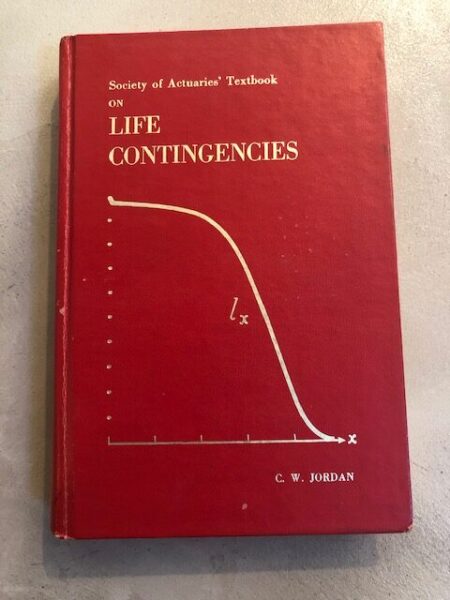
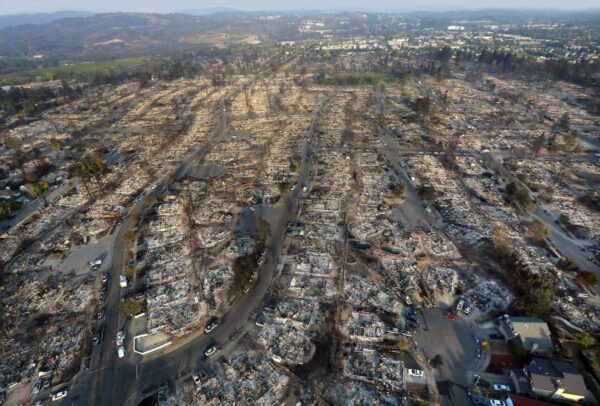
 My relief and gratitude were tempered somewhat, however, when I turned onto the road and saw that on the back of the sign was another message that had been left by my neighbors who had evacuated several days earlier.